
Among Sensex firms, Bajaj Finance, Bajaj Finserv, Reliance Industries, HDFC Bank, Tech Mahindra and Axis Bank were the major gainers. However, Asian Paints, HCL Tech, Titan and Hindustan Unilever were among the laggards.

Indian equity markets experienced a significant downturn, with the Sensex and Nifty plummeting due to rising crude oil prices, geopolitical tensions in West Asia, and continuous foreign fund outflows.

The Indian rupee weakened against the US dollar due to a strengthening dollar, high crude oil prices, and foreign fund outflows amid geopolitical uncertainties.

Indian markets on Dalal Street rallied sharply as easing tensions in the US-Iran conflict and stable oil prices boosted sentiment. Track Nifty 50 and BSE Sensex performance and key global triggers.
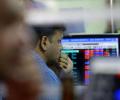
Indian stock market benchmark indices Sensex and Nifty experienced a significant drop in early trade due to rising crude oil prices, bearish global market trends, and continuous foreign fund outflows.

Indian benchmark indices Sensex and Nifty experienced volatility due to conflicting developments in West Asia, including reports of the Strait of Hormuz closure, which led to a rebound in crude oil prices and heightened investor concerns about supply disruptions and inflation.

The Indian embassy in Tehran has earlier stated that it is facilitating the safe movement of nationals who wish to leave Iran.

Indian markets on Dalal Street rallied sharply as easing tensions in the US-Iran conflict and stable oil prices boosted sentiment. Track Nifty 50 and BSE Sensex performance and key global triggers.

Indian benchmark indices Sensex and Nifty experienced a sharp decline in early trading due to escalating tensions in the Middle East, driving crude oil prices higher. Global market bearishness and foreign fund outflows further contributed to investor unease.

The Indian rupee gained 2 paise to settle at 93.33 against the US dollar, driven by positive sentiment in domestic equity markets and renewed hopes for US-Iran talks, despite rising WPI and CPI inflation.

The Reserve Bank of India (RBI) net-bought $7.4 billion from the spot foreign exchange market in February, its highest buy since March 2025, before heavily intervening by selling dollars in March as the rupee declined over 4 per cent following a spike in crude oil prices.
Indian stock market benchmarks Sensex and Nifty rebounded by over 1% on Monday, driven by value-buying in banking stocks after a three-day slump. Key gainers included UltraTech Cement, HDFC Bank, and Mahindra & Mahindra.

'Once the market decides it wants to go up, it goes up -- no amount of bad news can really hold it back.'

Indian equity markets experienced a volatile session, with the Sensex and Nifty recovering some ground after a significant plunge the previous day. Gains were driven by PSU bank, IT, and metal stocks, but concerns over rising fuel prices and geopolitical tensions limited the recovery.

Indian equity markets experienced a significant downturn as geopolitical tensions in West Asia, rising oil prices, and foreign fund outflows dampened investor confidence. The Sensex and Nifty both fell sharply in early trade, reflecting broader global market weakness.

Analysts predict that the ongoing conflict in West Asia, crude oil price fluctuations, and the US Federal Reserve's interest rate decision will significantly influence the Indian equity market this week.

The Indian rupee crashed to a record closing low against the US dollar due to rising global crude oil prices, a strengthening dollar, and geopolitical tensions in the Middle East.

Indian equity benchmarks, Sensex and Nifty, ended lower after a spectacular rally, with the Sensex tumbling 931 points, as renewed tensions in West Asia, particularly the risk to the ceasefire deal after Iran closed the Strait of Hormuz, dampened investor optimism.

'Nepal today is far more aware, self-confident, aspirational, and assertive.' 'India's policy so far has not been geared to this shift. It is time to redraw our Nepal strategy.'

Indian equities on Dalal Street saw volatility as global market trends and fresh tariff concerns linked to Donald Trump impacted investor sentiment. Track Sensex, Nifty50 movement and key market drivers for Feb 24, 2026.
The Indian rupee saw a significant appreciation against the US dollar following President Trump's suspension of military strikes against Iran and the Reserve Bank of India's decision to maintain its key interest rate. Market sentiment was further buoyed by positive comments from the RBI regarding the health of the banking sector.
Indian stock markets recovered from early losses to close higher, driven by value buying in IT and banking shares and a rebound in the rupee.
Indian stock market benchmarks Sensex and Nifty rebounded strongly after a two-day decline, driven by falling crude oil prices and positive global cues amid hopes of de-escalation in the Middle East.

Is the current rally telegraphing a durable peace plan in West Asia, boosted by United States (US) President Donald Trump's incoherent and contradictory posts on social media?
Indian stock market benchmark indices Sensex and Nifty experienced a significant decline, driven by escalating tensions in the Middle East and rising crude oil prices.

Indian benchmark stock indices Sensex and Nifty rallied for the second consecutive day, closing nearly 1 per cent higher, driven by gains in metal and auto sectors and positive global market trends.

Indian stock market indices Sensex and Nifty closed nearly 1 per cent higher, marking their third consecutive day of gains, supported by a slight decrease in crude oil prices and positive global market trends.

Onestruction Inc and DataKaveri Systems have signed an MoU to establish a framework for strategic and technical collaboration in urban and built environment data exchange.

In a world fractured by uncertainty, India stands out for its policy consistency, paired with sustained ambition, points out Pritam Banerjee.
Indian markets on Dalal Street rallied sharply as easing tensions in the US-Iran conflict and stable oil prices boosted sentiment. Track Nifty 50 and BSE Sensex performance and key global triggers.

Indian markets on Dalal Street rallied sharply as easing tensions in the US-Iran conflict and stable oil prices boosted sentiment. Track Nifty 50 and BSE Sensex performance and key global triggers.
Indian benchmark indices, Sensex and Nifty, rallied significantly following a sharp decline in crude oil prices. This decline was triggered by US President Donald Trump's announcement of progress in negotiations with Iran towards a peace agreement, which led to renewed optimism in global markets.

The Indian rupee weakened against the US dollar due to rising crude oil prices, geopolitical tensions in the Middle East, and foreign fund outflows.
Benchmark indices Sensex and Nifty closed lower in a highly volatile trade on Thursday amid relentless foreign fund outflows and selling in blue-chip ICICI Bank. Falling for the second day in a row, the 30-share BSE Sensex declined 148.14 points or 0.18 per cent to settle at 83,311.01.

In the present hyper-connected world, there are many domestic and global factors that affect financial markets. Of them, the most powerful and often least predictable are geopolitical events, which often boil down to one diplomatic headline.

Benchmark indices Sensex and Nifty ended lower on Thursday, snapping a three-day rally, amid a weak trend in global stock markets.
Benchmark indices Sensex and Nifty experienced a significant decline, falling over 1 per cent due to foreign fund outflows and global uncertainties.

Indian benchmark stock indices, Sensex and Nifty, surged over 1 per cent, driven by optimism surrounding potential US-Iran peace talks and a significant drop in crude oil prices below the USD 100 per barrel mark. This de-escalation in geopolitical concerns and easing inflation pressures provided a substantial boost to investor sentiment.

The Indian government has dismissed the US Commission on International Religious Freedom's (USCIRF) report on religious freedom in India, stating that it does not recognise the commission's authority to comment on the rights of Indian citizens.

The rupee witnessed a volatile trading session and settled for the day on a slightly lower note, down 1 paisa at 90.66 against the US dollar on Monday, as traders assessed the details of the India-US interim trade framework.
